

UROLOGY & INCONTINENCE
We have the best doctors for
Urology & Incontinence
problems in Dallas
Private consultations available at our SEVA Pain Management Clinics in Lewisville and Rowlett
Common Conditions we treat
• Overactive Bladder (OAB)
• Urinary Urgency
• Frequent Urination
• Urge Incontinence
• Stress Urinary Incontinence
• Mixed Urinary Incontinence
• Nocturia (Waking Up at Night to Urinate)
• Urinary Retention
• Fecal Incontinence
Our Advanced Procedures
• Peripheral Nerve Evaluation (PNE)
• Sacral Neuromodulation (InterStim® Therapy)
• Botox for Overactive Bladder
• Percutaneous Tibial Nerve Stimulation (PTNS)
• Pelvic Floor Therapy Coordination
• Personalized Bladder Care Programs
Why Choose Seva Healthcare
- Best Doctors Specialized in Urology & Incontinence
- Board Certified Specialists
- Advanced Minimally Invasive Treatments
- State-of-the-Art Facilities
- Personalized Treatment Plans
- Compassionate Patient-Centered Care

🟢 Meet your Doctor
Dr. Marie-Blanche N. Tchetgen, M.D.
Board-Certified Urologist · Female Pelvic Medicine & Reconstructive Surgery (FPMRS)
Dr. Marie-Blanche N. Tchetgen is a board-certified urologist and fellowship-trained specialist in Female Pelvic Medicine and Reconstructive Surgery, with more than two decades of clinical leadership in urogynecology and reconstructive pelvic surgery. She brings extensive experience in the advanced treatment of complex urinary incontinence and related pelvic health conditions.
Urology & Incontinence · Dallas-Fort Worth
Treatment for Bladder Leakage & Urgency in Lewisville & Rowlett
If you leak when you laugh, cough, or exercise, or you run to the bathroom several times a day or night, you are not alone. SEVA Healthcare offers minimally invasive, evidence-based options like sacral neuromodulation, nerve stimulation, Bladder Botox, and urethral bulking, in a private and respectful setting. A female provider is available on request.
Patient Appointment Request
We will get back to you as soon as possible.
Please try again later.
Bladder leaks and urgency are common, and you don’t have to live with them
Many patients quietly manage urinary leakage or sudden urgency for years before bringing it up. Sometimes because it feels personal, sometimes because they were told it was “just part of getting older” or “normal after childbirth.” It isn’t something you have to accept.
Urinary incontinence is a medical condition with specific causes, and depending on the type and cause, there are minimally invasive treatments that may help improve bladder control. The first step is simply understanding which pattern you have.
A consultation at SEVA Healthcare is confidential, unrushed, and judgment-free. We listen first, identify the pattern, and walk you through every option, from conservative pelvic floor support to advanced procedures. A female provider can be requested for any visit.
Which pattern sounds like you?
Most patients fall into one of these categories. The right treatment depends on which one applies to you, or whether you have a mix.
Stress urinary incontinence (SUI)
“I leak when I laugh, cough, sneeze, lift, or exercise.”
Leakage triggered by pressure or movement. Common in women after childbirth, aging, or pelvic floor changes. Often improves with urethral bulking (Bulkamid) or pelvic floor therapy.
Overactive bladder (OAB) & urgency
“When I have to go, I have to go now.”
Sudden, hard-to-control urgency, frequent bathroom trips, and sometimes leakage before you reach the toilet. Treatable with Bladder Botox, PTNS nerve stimulation, or sacral neuromodulation.
Urge incontinence
“I leak before I make it to the bathroom.”
A specific OAB pattern where urgency leads to involuntary leakage. Often responds well to nerve-based therapies including sacral neuromodulation (InterStim) and PTNS.
Mixed incontinence
“It’s a little of both.”
Leakage with activity plus urgency and frequency. We map which component is dominant and build a layered plan that addresses both.
Nocturia (waking to urinate)
“I wake up multiple times a night to go.”
Repeated nighttime bathroom trips that disrupt sleep, mood, and daytime energy. Often part of an OAB pattern that may respond to nerve modulation or medication.
Urinary frequency & retention
“I’m always in the bathroom, or I can’t fully empty.”
Going more than 8 times a day, or feeling like your bladder doesn’t fully empty. Both ends of the spectrum can respond to sacral neuromodulation.
Post-childbirth bladder changes
“It started after my kids were born.”
Pregnancy and delivery can change pelvic floor support, leading to leaks with activity or urgency. A female provider is available to discuss options in a comfortable setting.
Menopausal & aging-related bladder changes
“It’s been getting worse for years.”
Hormonal and tissue changes after menopause often affect bladder control. Many patients are surprised how much improvement is possible at any age.
Our minimally invasive incontinence treatments
SEVA Healthcare offers a layered, conservative-first approach. Most patients start with non-procedural support; advanced options are reserved for patients who haven’t responded to first-line care. Every recommendation is individualized after a private consultation.
/SNM
Sacral Neuromodulation (InterStim)
A small implanted device that delivers mild electrical impulses to the sacral nerves (the nerves that regulate the bladder). FDA-cleared for urinary urgency, urgency-frequency, urge incontinence, and non-obstructive retention in selected patients who haven’t responded to or can’t tolerate conservative treatments. Patients trial the therapy externally before any permanent implant.
Percutaneous Tibial Nerve Stimulation (PTNS)
An office-based nerve stimulation therapy that uses a fine needle near the ankle to gently stimulate the tibial nerve, which shares a neural pathway with the bladder. A typical course is 30-minute weekly sessions over 12 weeks, then a maintenance schedule. Used for urgency, frequency, and urge incontinence in appropriate patients. No implant required.
Bladder Botox (OnabotulinumtoxinA)
A short, office-based procedure that places small Botox injections into the bladder wall to relax the overactive bladder muscle. Per the Urology Care Foundation and Mayo Clinic, bladder Botox can reduce urinary urgency and urge incontinence in appropriate patients, commonly after other treatments haven’t worked well enough. Effects typically last several months and the treatment can be repeated.
AMID
Urethral Bulking (Bulkamid®) for Stress Incontinence
An FDA-approved urethral bulking agent for adult women with stress urinary incontinence due to intrinsic sphincter deficiency, including stress-predominant mixed incontinence. A minimally invasive office procedure that supports closure of the urethra to help reduce leakage with cough, laugh, sneeze, lifting, or exercise. No incisions, rapid return to activity.
Pelvic Floor Therapy, Bladder Training & Medication
First-line, conservative care for many patients: pelvic floor physical therapy, bladder training, lifestyle and dietary adjustments, vaginal estrogen or pessary support where appropriate, and OAB medications. We start here whenever it’s clinically reasonable.
Aligned with the AUA/SUFU guideline. The American Urological Association and Society of Urodynamics, Female Pelvic Medicine & Urogenital Reconstruction recommend an individualized, layered approach to overactive bladder, not a rigid sequence forced on every patient. That’s the model we follow.
Why patients choose SEVA Healthcare for bladder control
A Private, Judgment-Free Consultation
We treat bladder symptoms as a routine medical condition. Consultations are unrushed, confidential, and built around your comfort, with the time and respect this topic deserves.
Female Provider Available on Request
For women who prefer to discuss bladder leakage or pelvic concerns with a female provider, we can schedule your evaluation accordingly. Just ask when you book.
Full Range of Modern Therapies
Conservative care, Bladder Botox, PTNS, sacral neuromodulation (InterStim), and Bulkamid urethral bulking, all under one practice. We match the therapy to your pattern, not the other way around.
Board-Certified Specialists
SEVA’s incontinence service line is delivered in partnership with MM Urology, bringing fellowship-level urologic and pelvic expertise to Lewisville and Rowlett.
Evidence-Based, Guideline-Aligned
Our care follows the AUA/SUFU OAB guideline and FDA labeling for each therapy, including Medtronic InterStim and Bulkamid. No exaggerated promises, just the right tool for the right patient.
Conservative First, Always
We don’t default to surgery or implants. Many patients improve with pelvic floor therapy, bladder training, or office-based procedures long before an implant is ever considered.
What to expect at your first visit
A private, unrushed conversation
We start by listening. When does leakage happen? How many times a day or night are you going? What have you already tried? You set the pace.
Identifying your pattern
Stress incontinence, urgency / OAB, mixed, or another cause. A focused exam and (if needed) a simple bladder diary or in-office testing clarifies which pattern fits.
A plan that matches you
Conservative care first when reasonable. If you’ve already tried first-line treatments, we discuss whether Bladder Botox, PTNS, sacral neuromodulation, or Bulkamid may be appropriate.
Trial before commitment
For sacral neuromodulation, patients trial the therapy externally for several days before any permanent implant decision. PTNS is non-implant. Bladder Botox is repeatable rather than permanent.
Follow-up and adjustment
We track your symptoms over time and adjust the plan. Many patients combine therapies (for example, pelvic floor therapy alongside medication or nerve stimulation) for the best result.
Two Dallas-Fort Worth locations
The SEVA Healthcare urology and incontinence service line is offered at both of our DFW clinics. Choose whichever is closer to home or work.
SEVA Healthcare, Lewisville
1850 Lakepointe Drive, Suite 700, Lewisville, TX 75057 · (214) 306-4116
Serves Lewisville, Plano, Frisco, Flower Mound, Carrollton, Coppell, Irving, The Colony, Highland Village, Lake Dallas
SEVA Healthcare, Rowlett
7501 Lakeview Parkway, Suite 135, Rowlett, TX 75088 · (214) 306-4116
Serves Rowlett, Rockwall, Garland, Mesquite, Sachse, Wylie, Sunnyvale, Royse City, Heath, Fate
Insurance & payment
SEVA Healthcare accepts most major insurance plans for incontinence and urology care. We’ll verify your benefits before scheduling any procedure so you know exactly what to expect.
All major plans: BCBS of Texas, UnitedHealthcare, Aetna, Cigna, Humana, and most regional carriers.
Medicare & Texas Medicaid, including Medicare Advantage and Texas Medicaid managed-care plans.
Coverage confirmed in advance for Botox, InterStim, Bulkamid, and PTNS, so there are no billing surprises.
Transparent cash pricing, with payment plans available for advanced procedures.
Frequently asked questions
Is bladder leakage really treatable, or do I just have to live with it?
Urinary incontinence is a medical condition, not just a normal part of aging or a permanent consequence of childbirth. In many cases, there are treatment options (conservative, medical, or procedural) that can help improve bladder control. The right step is a private consultation to find the cause.
What is the difference between stress and urge incontinence?
Stress urinary incontinence (SUI) is leakage triggered by pressure or movement: coughing, laughing, sneezing, lifting, exercising. Urge incontinence is leakage triggered by sudden, hard-to-control urgency. Many patients have a mix of both. Treatments differ for each, so identifying the pattern matters.
What is sacral neuromodulation (InterStim)?
Sacral neuromodulation is an FDA-cleared therapy that uses a small implanted device to deliver mild electrical impulses to the sacral nerves, which help regulate the bladder. It is indicated for urinary urgency, urgency-frequency, urge incontinence, and non-obstructive urinary retention in selected patients who haven’t responded to or can’t tolerate conservative treatments. Patients trial the therapy externally before any permanent implant.
How does PTNS (tibial nerve stimulation) work?
PTNS is an office-based therapy that uses a fine needle near the ankle to gently stimulate the tibial nerve, which shares a neural pathway with the bladder. A typical course is 30-minute weekly sessions over 12 weeks. There is no implant, and it can be a useful option for urgency, frequency, and urge incontinence in appropriate patients.
Does Bladder Botox really help overactive bladder?
According to the Urology Care Foundation and Mayo Clinic, Botox injections into the bladder muscle may help relax the overactive bladder and reduce urinary urgency and urge incontinence in appropriate patients, commonly after first-line treatments haven’t worked well enough. Effects typically last several months and the treatment can be repeated.
What is Bulkamid, and is it for me?
Bulkamid is an FDA-approved urethral bulking agent for adult women with stress urinary incontinence due to intrinsic sphincter deficiency, including stress-predominant mixed incontinence. It’s a minimally invasive office procedure designed to support closure of the urethra to reduce leakage with cough, laugh, sneeze, or activity. Your provider will help determine if you’re a candidate.
Can I see a female provider?
Yes. A female provider is available for incontinence and pelvic concerns on request. Just let us know when you book your appointment. Our goal is to make sure you feel comfortable, heard, and never rushed.
I leak when I laugh, cough, or exercise. Which treatment fits me?
That pattern usually points to stress urinary incontinence (SUI). First-line care often includes pelvic floor therapy. If symptoms persist, urethral bulking (Bulkamid) is a minimally invasive office option for women with SUI who haven’t responded to conservative care. A consultation can help confirm which option may be right for you.
I wake up multiple times a night to urinate. Is that treatable?
Nighttime urination (nocturia) is often part of an overactive bladder pattern and can sometimes be improved with the same therapies used for daytime urgency, including nerve modulation and bladder-relaxing therapies. Identifying the cause is the first step.
Does insurance cover these treatments?
Most major commercial insurance plans, Medicare, and Texas Medicaid cover medically necessary incontinence evaluation and treatment, including Bladder Botox, PTNS, sacral neuromodulation, and Bulkamid when criteria are met. We verify your specific benefits before scheduling any procedure.
How long until I see improvement?
It depends on the cause and the treatment. Conservative care and PTNS unfold over weeks; Bladder Botox typically takes a few weeks to reach full effect; sacral neuromodulation results are first evaluated during the trial phase. Your provider will set realistic expectations specific to your plan.
Are these procedures done in the office or at a surgical center?
PTNS, Bladder Botox, and Bulkamid are typically office-based procedures. Sacral neuromodulation involves an external trial phase, and the implant procedure (if you choose to proceed) is performed at an accredited surgical facility.
Related from SevaPedia
Explore your bladder-control options in a private consultation
A respectful, unrushed visit at our Lewisville or Rowlett clinic. Female provider available on request. Most insurance accepted.
The information on this page is for educational purposes only and does not constitute medical advice. Individual results vary; not every treatment is appropriate for every patient. Candidacy for sacral neuromodulation, PTNS, Bladder Botox, Bulkamid, or other therapies is determined by a clinical evaluation. Always consult a board-certified specialist for guidance on your specific symptoms. SEVA Healthcare is a multi-specialty interventional practice with locations in Lewisville, Rowlett, Tulsa, Santa Fe, and Albuquerque. Urology and incontinence services are delivered in partnership with MM Urology.
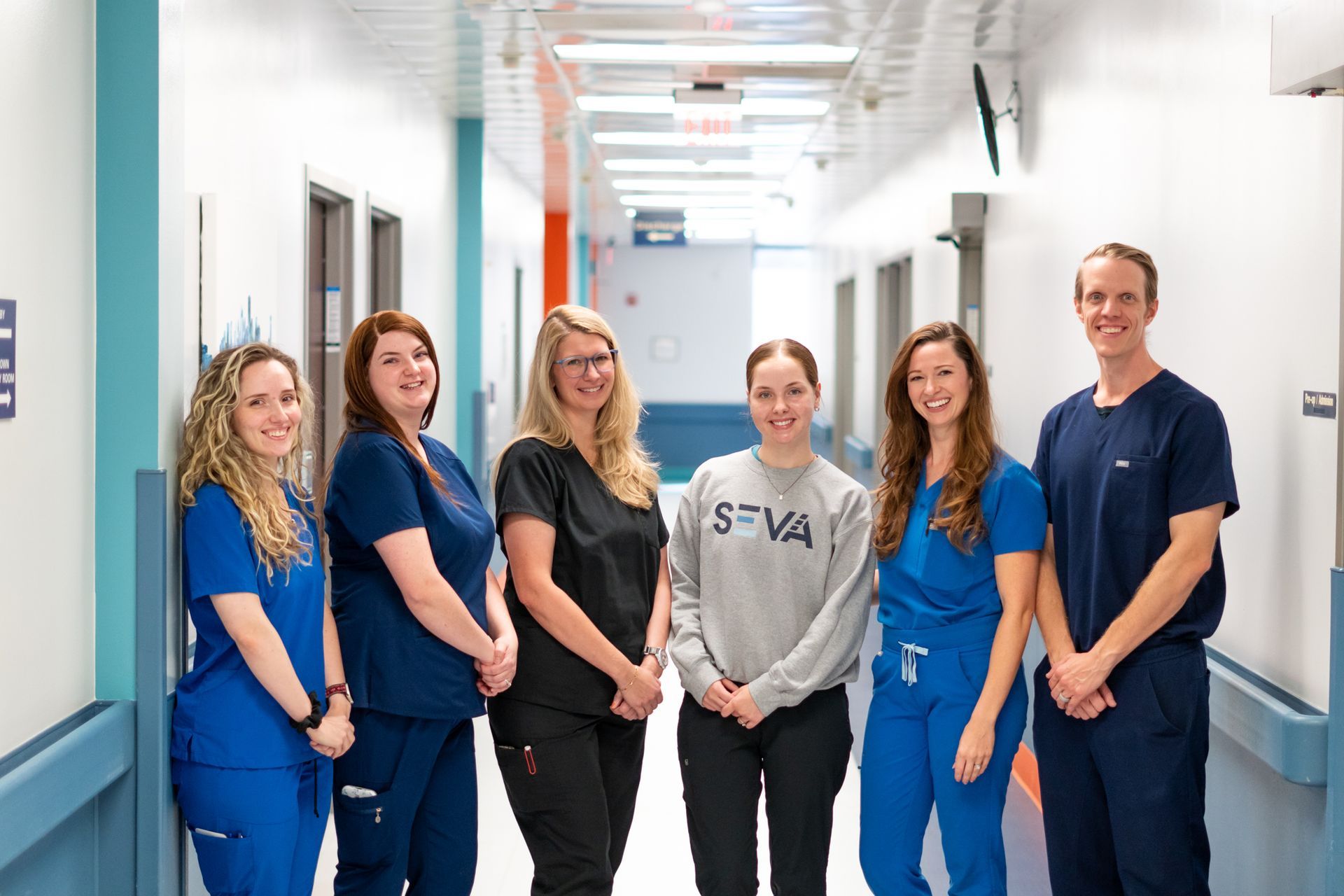
Our Dedicated Care Team ❤️
Behind every successful treatment is a team that truly cares. From our nurse practitioners and medical assistants to our front office staff, each member of the Seva family is dedicated to providing personalized, patient-first support in every step of your care journey.
Need Help or Have Questions About Your Care?
Our Patient Support team is here to help you, whether you need to schedule an appointment, review your treatment plan, or learn more about your options.