
Sciatica Treatment in Tulsa: A Board-Certified Pain Doctor’s Complete 2026 Guide
If shooting pain runs from your lower back into your buttock and down one leg — sometimes with numbness, tingling, or weakness — you likely have sciatica. This guide, written and reviewed by the board-certified pain physicians at SEVA Healthcare’s two Tulsa clinics, explains what’s actually causing it, which at-home tips actually work in the first 72 hours, the evidence-based treatment ladder, when you need a specialist (and when you don’t need surgery), and exactly what a proper sciatica workup costs in Tulsa.

What every Tulsa sciatica patient should know
- Sciatica is not a diagnosis — it’s a symptom. Something is irritating your sciatic nerve or one of its lumbar nerve roots (L4, L5, or S1). Finding what is causing the irritation is the entire game.
- Roughly 90% of sciatica cases resolve within 6–12 weeks with the right conservative approach. The other 10% need targeted interventional treatment — but almost never surgery as the first step.
- The most common cause in Tulsa patients is a lumbar disc herniation compressing a nerve root. Other causes include spinal stenosis, spondylolisthesis, piriformis syndrome, and (rarely) tumors or infection.
- See a pain specialist if your sciatica hasn’t improved in 4–6 weeks, is getting worse, or is accompanied by leg weakness, numbness, or bladder/bowel changes.
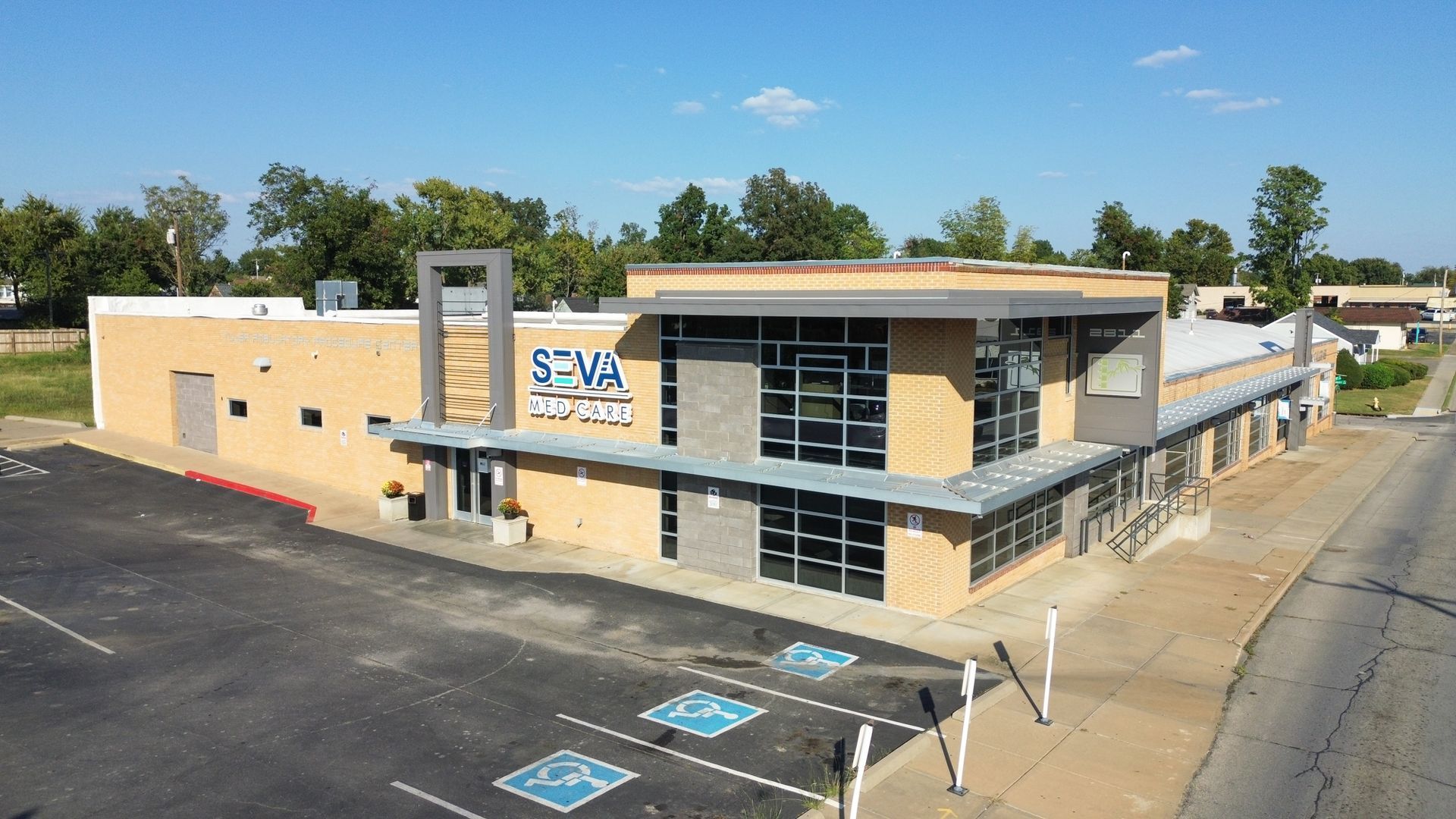
- SEVA Tulsa’s two clinics ( Midtown & South Sheridan) offer same-week new-patient appointments and accept BCBS Oklahoma, UnitedHealthcare, Aetna, Cigna, Humana, Medicare, SoonerCare, TRICARE, workers’ comp, and MVA claims.
What sciatica actually is
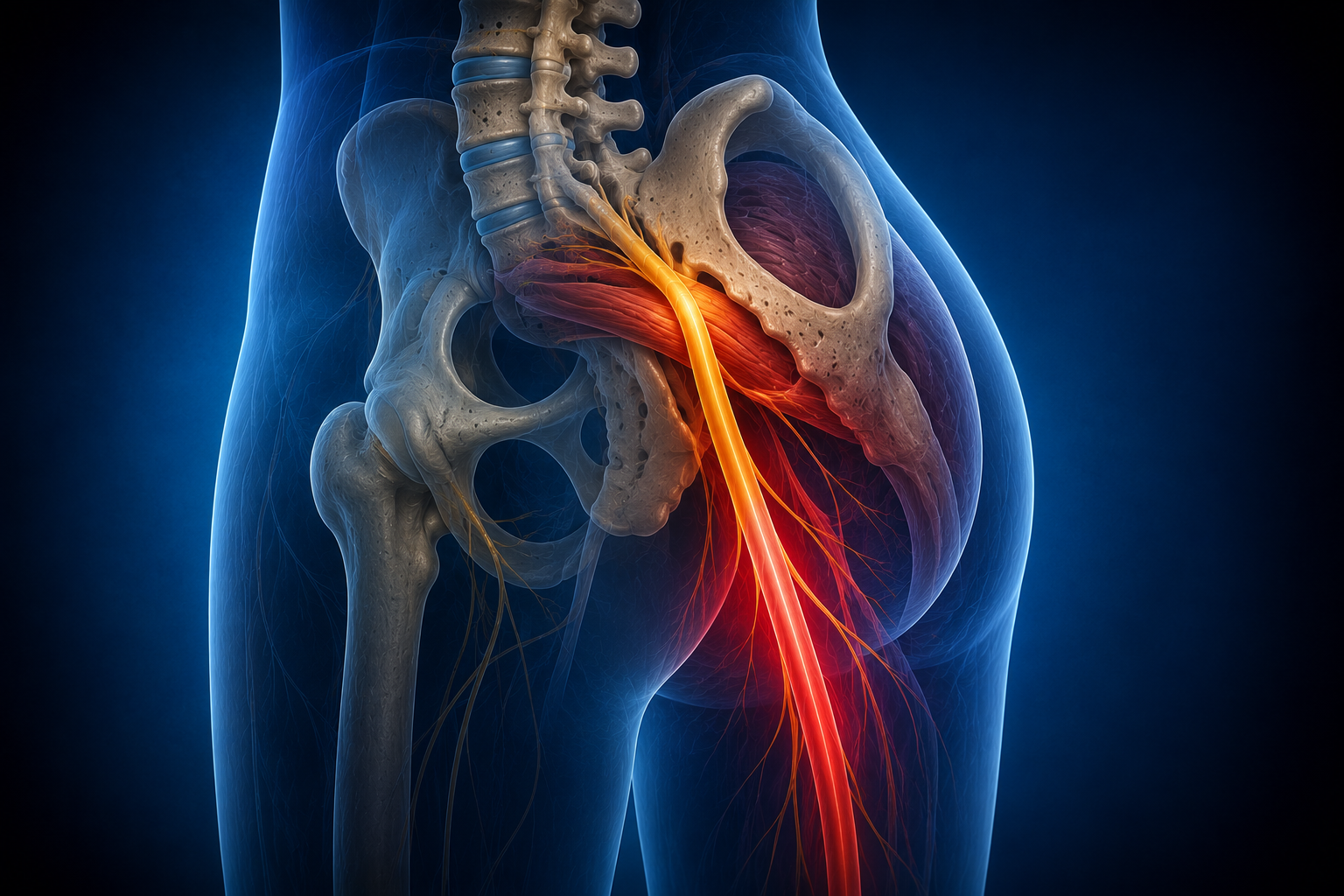
The sciatic nerve is the largest nerve in the human body — roughly the diameter of your thumb where it exits the pelvis, then tapering as it travels down the back of each leg to the foot. It’s formed by the joining of five nerve roots exiting the lower spine (L4, L5, S1, S2, and S3). When one of those nerve roots or the sciatic nerve itself is compressed, irritated, or inflamed, you get the classic pattern most patients describe as “sciatica.” 1
Two important clarifications up front. First: sciatica is a symptom , not a diagnosis. The clinical work is figuring out what’s pressing on the nerve. Second: not every leg pain is sciatica. Pain from a hip joint, sacroiliac joint, piriformis muscle, or vascular problem can all mimic sciatica — and each needs a different treatment.
Sciatica symptoms — how to tell it’s sciatica and not just back pain
The classic sciatica pattern:
- Pain that radiates from the low back or buttock down one leg — usually one side, not both.
- Sharp, burning, or electric-shock quality — not the dull ache of pure muscle strain.
- Often worse with sitting, coughing, sneezing, or straining. Frequently relieved (briefly) by walking or lying flat.
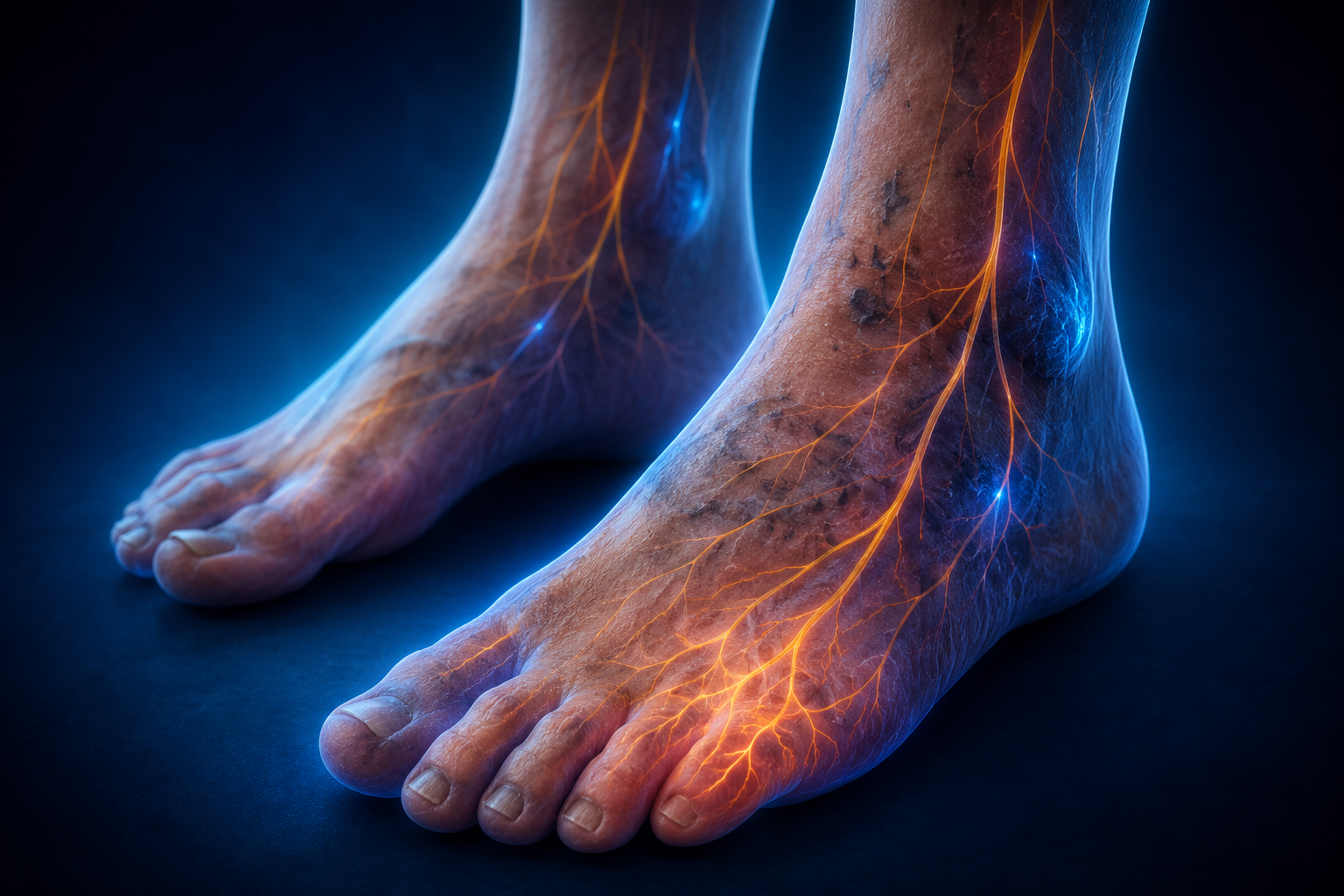
- Numbness or tingling in a specific stripe down the leg or into the foot — often the outer calf, the top of the foot, or the sole.
- Sometimes weakness — difficulty lifting the foot (foot drop), rising onto toes, or climbing stairs.
- Symptoms usually follow a specific dermatome(L4 → shin, L5 → top of foot, S1 → sole and outer calf), which is a strong clue to the involved nerve root.
What sciatica doesn’t feel like: bilateral symmetric back pain, pain that’s worse with standing but better sitting, or diffuse cramping in the calves brought on by walking (that’s more consistent with neurogenic claudication from spinal stenosis, or vascular claudication).
Sciatica in Tulsa: the local picture
Sciatica is common. Lifetime prevalence in U.S. adults is estimated between 10–40%, with peak incidence in the 40s and 50s. 2 In our Tulsa practice, sciatica-pattern radicular leg pain is one of the top three reasons for a new pain-management consultation, alongside chronic low back pain and knee osteoarthritis.
SEVA Healthcare’s Tulsa clinics serve the greater Tulsa metro including Broken Arrow, Bixby, Owasso, Jenks, Sand Springs, Sapulpa, Glenpool, Coweta, Claremore, Collinsville, and Bartlesville. Most Tulsa-area sciatica patients we see have already tried ibuprofen, a chiropractor, and a course of physical therapy without lasting relief.
7 causes of sciatica we treat most in Tulsa
Precise diagnosis of the pain generator determines the right treatment. These are the seven causes we identify most often, roughly in order of prevalence:
Lumbar disc herniation
The single most common cause. The soft inner nucleus of a spinal disc pushes through a tear in the outer wall and presses on a nearby nerve root. Peak incidence: 30s–50s. Most heal within 6–12 weeks; a subset become chronic when inflammation around the nerve root persists. See our chronic back pain Tulsa guide for the full context.
Lumbar spinal stenosis
Narrowing of the spinal canal — almost always age-related. Produces sciatica-type pain often bilaterally, worse with standing and walking, better when leaning forward (over a shopping cart). Common after age 60.
Degenerative spondylolisthesis
One vertebra slides forward on the one below, narrowing the foramen where nerve roots exit. Produces mechanical low back pain plus radicular leg symptoms. Common in adults over 50, especially women.
Piriformis syndrome
The piriformis muscle in the buttock spasms and compresses the sciatic nerve as it passes underneath (or through) the muscle. Pain is one-sided buttock pain radiating down the leg, worse with prolonged sitting and driving. Frequently missed on MRI because it’s a soft-tissue compression.
Facet joint arthropathy with foraminal narrowing
Arthritic overgrowth of the small facet joints narrows the neural foramen and irritates the exiting nerve root. Often responds durably to radiofrequency ablation after positive diagnostic medial branch blocks.
Sacroiliac (SI) joint dysfunction
Can mimic true sciatica — pain radiates into the buttock and back of thigh, but usually stops at the knee rather than extending to the foot. Diagnostic SI joint injection distinguishes it from true lumbar radiculopathy.
Rare but important: tumor, infection, or fracture
New sciatica in a patient with a history of cancer, unexplained weight loss, fever, IV drug use, immunosuppression, or significant trauma warrants urgent imaging to rule out serious causes. See the red flags below.
How sciatica is properly diagnosed
A proper sciatica workup is not just an MRI. In fact, ordering imaging too early is one of the most common mistakes in back pain care because most adults over 40 have “abnormal” MRI findings that don’t correlate with their symptoms. 3
The 4-step SEVA Tulsa sciatica workup
- Detailed history. Onset, pain quality, distribution (which dermatome), aggravating and relieving factors, prior treatments, work injury or MVA context, and red-flag screening.
- Focused physical exam. Straight-leg raise, slump test, femoral stretch test, neurological exam (strength of hip flexors / quads / ankle dorsiflexors / plantar flexors, sensation in L4/L5/S1 dermatomes, reflexes at knee and Achilles), and gait assessment.
- Targeted imaging. MRI of the lumbar spine is the gold standard when imaging is needed. CT myelogram is an alternative for patients who can’t have MRI. X-rays add limited value except for suspected instability or fracture.
- Diagnostic injection when needed. If exam and imaging don’t clearly identify the pain generator, a precisely placed diagnostic injection (transforaminal epidural, medial branch block, SI joint injection, or piriformis injection) can confirm the source before therapeutic escalation.
Sciatica red flags — when it’s a medical emergency
Most sciatica, even when severe, is not dangerous. But these symptoms warrant same-day evaluation — either at an ER or with a same-day pain specialist visit:
Get evaluated the same day if you have any of these:
- Loss of bladder or bowel control, or numbness in the “saddle” area (inner thighs, groin) — possible cauda equina syndrome (surgical emergency)
- Progressive weakness in a leg — foot drop, difficulty walking on toes or heels, or leg giving way
- Sciatica in both legs at the same time(bilateral)
- Fever with sciatica — possible spinal infection
- Unexplained weight loss or history of cancer with new sciatica — rule out spinal metastasis
- Sciatica after significant trauma(fall from height, MVA) — rule out fracture
- IV drug use or immunocompromised state with new sciatica — rule out discitis or epidural abscess
10 sciatica home relief tips that actually work
Before you book an appointment (or while you wait to be seen), these evidence-based self-care tips work for most acute sciatica cases. Nothing on this list replaces professional evaluation for pain that isn’t improving after 2–3 weeks.
Physician-approved sciatica home relief tips
1 Stay moving, gently
Bed rest beyond 1–2 days actually worsens outcomes. Short walks (10–15 minutes, several times a day) keep the nerve gliding and prevent deconditioning.
2 Ice for the first 48 hours
Ice pack (wrapped in a towel) on the low back or buttock for 15–20 minutes every 2 hours. Reduces nerve-root inflammation early on.
3 Switch to heat after day 2
Warm shower, moist heating pad, or hot bath — relaxes surrounding muscle spasm that’s guarding the injury.
4 Sleep on your side, knees bent
Place a pillow between your knees to keep the pelvis neutral. Back sleepers: pillow under the knees. Avoid sleeping on your stomach.
5 NSAIDs (if you can take them)
Ibuprofen 400–600 mg every 6–8 hours with food, or naproxen 220–440 mg twice daily, for up to 7–10 days. Not if you have kidney disease, ulcers, bleeding risk, or contraindications.
6 McKenzie extension (press-ups)
Lie face down, prop up on elbows for 30 seconds, then push up onto hands with hips staying on the floor. 10 reps, several times a day. Works for many disc-herniation sciatica cases. 4
7 Piriformis stretch
Lie on your back, cross the affected ankle over the opposite knee, then gently pull the uncrossed thigh toward your chest. Hold 30 seconds. Excellent for piriformis-related sciatica.
8 Nerve flossing
Seated, extend your leg forward slowly while tucking your chin, then bend your knee and look up. 10 slow reps, twice a day. Improves sciatic nerve mobility without irritating it.
9 Get up every 30 minutes at work
Prolonged sitting is the single biggest driver of sciatica flare-ups. Set a 30-minute timer. Stand, walk 90 seconds, sit back down. Consider a standing desk.
10 Firm mattress + supportive shoes
Sagging mattresses (especially older pillow-tops) worsen sciatica by twisting the pelvis. Same for unsupportive shoes. Both are underrated environmental fixes.
Do’s and don’ts for the first 72 hours of sciatica
Do
- Take short walks (10–15 min, multiple times a day)
- Ice the low back / buttock for the first 48 hours
- Sleep on your side with a pillow between knees
- Try NSAIDs if not contraindicated
- Get up every 30 minutes at work
- Try McKenzie press-ups and piriformis stretches
- Book a consult if pain lasts > 2–3 weeks
Don’t
- Bed rest more than 1–2 days — it worsens outcomes
- Sleep on your stomach
- Do full sit-ups or toe-touch stretches (both aggravate a disc)
- Lift heavy things or twist while bending
- Get spinal manipulation for suspected disc herniation without imaging
- Take opioids as a first-line treatment
- Ignore new weakness, numbness, or bladder/bowel changes
The evidence-based sciatica treatment ladder
The best-supported approach for sciatica is a stepped ladder — starting with the lowest-risk, lowest-cost interventions and only escalating when they’ve been given a fair trial. Skipping steps or jumping straight to surgery isn’t always wrong, but it’s often unnecessary.
Conservative & foundational care
Home tips above, physical therapy (McKenzie method + core stabilization), NSAIDs, activity modification, ergonomic adjustments. Trial period: 4–6 weeks.
First line · 4-6 weeksNon-opioid targeted medications
Nerve-modulating medications (gabapentin, pregabalin, duloxetine) for the neuropathic component. Short-course oral steroids (methylprednisolone taper) in selected cases. Muscle relaxants for spasm-driven flare-ups.
Adjunct · Non-opioidTransforaminal epidural steroid injection
A small amount of corticosteroid placed precisely at the inflamed nerve root under live X-ray guidance. 15-minute outpatient procedure. Onset of relief in 3–7 days. Often gives durable relief while the disc herniation naturally reabsorbs. This is the interventional workhorse for disc-related sciatica.
Interventional · Gold standardRadiofrequency ablation (RFA) & nerve blocks
For sciatica-mimic pain driven by facet-joint arthropathy or SI joint dysfunction confirmed by prior diagnostic injections. RFA gives 9–18 months of relief per treatment, repeatable. Read our RFA Tulsa service page.
Facet / SI · Long-lastingMILD procedure (for stenosis-related sciatica)
Minimally invasive lumbar decompression restores canal space in patients whose sciatica comes from ligamentum flavum hypertrophy. 45-minute outpatient procedure, same-day recovery, no hardware, no fusion.
Stenosis · Same-day recoverySpinal cord stimulation (SCS)
FDA-approved for chronic radicular pain that hasn’t responded to injections and (in many cases) surgery. Small leads placed in the epidural space modify pain perception. Always trialed for 5–7 days before permanent implant. See our SCS treatment page.
Advanced · When less has failedSurgical consultation (microdiscectomy or MI decompression)
Reserved for progressive neurological deficit, cauda equina, or radicular pain unresponsive to appropriate interventional care over 6–12 weeks. SEVA works with minimally invasive spine surgeons in Tulsa for the small subset of sciatica patients who benefit from surgery.
When indicated · Not firstNot sure where you are on the ladder?
Take our free 90-second Find Your Pain interactive tool — get matched to the right SEVA specialist and treatment path.
Find Your Pain →Best SEVA Tulsa sciatica specialists — who to see for what
SEVA Tulsa’s pain management team covers every step of the sciatica treatment ladder. Here’s who to book with, based on what your sciatica needs.
Dr. Jayen Patel, MD

Dr. Amit Mirchandani, MD

Dr. Alex Pham, MD

Dr. Aileen H. Padilla, DO, MBA
For SEVA Tulsa’s full physician roster, see our comparison guide: 8 Best Pain Management Doctors in Tulsa (2026).
Sciatica treatment cost in Tulsa
Your actual out-of-pocket depends on your specific insurance plan — copay, coinsurance, and remaining deductible. Below are realistic ranges for common sciatica services at SEVA Tulsa:
| Service | With insurance (typical) | Self-pay (uninsured) |
|---|---|---|
| New-patient sciatica consult | $25–$60 copay | $185–$275 |
| Lumbar MRI(outside imaging center) | Deductible + coinsurance | $450–$1,200 |
| Transforaminal epidural steroid injection | Deductible + coinsurance | $650–$1,100 |
| Diagnostic medial branch blocks | Deductible + coinsurance | $550–$950 per level |
| Radiofrequency ablation (RFA) | Deductible + coinsurance | $1,800–$3,200 |
| Piriformis injection | Deductible + coinsurance | $400–$650 |
| SI joint injection | Deductible + coinsurance | $550–$900 |
| SCS trial + permanent implant | Deductible + coinsurance | Typically insurance-required |
Insurance we accept for sciatica treatment in Tulsa
SEVA Tulsa accepts most major insurance plans: BCBS Oklahoma, UnitedHealthcare, Aetna, Cigna, Humana, GlobalHealth, CommunityCare, HealthChoice, Oklahoma SoonerCare / SoonerSelect (Aetna Better Health, Humana Healthy Horizons, Oklahoma Complete Health), Medicare and Medicare Advantage, Medigap plans, TRICARE, VA Community Care Network, and FEHB plans (BCBS Federal, GEHA, MHBP).
For accident-related sciatica — car crashes, work injuries — SEVA bills all major auto insurance (Progressive, State Farm, GEICO, Allstate, USAA, Farmers, Liberty Mutual) and Oklahoma workers’ comp carriers (CompSource Mutual, Travelers, The Hartford, Sedgwick TPA). For attorney-represented cases, SEVA accepts Letters of Protection so treatment can start immediately with no out-of-pocket. See our MVA pain treatment page.
SEVA Tulsa locations & directions
SEVA Healthcare operates two Tulsa clinics, both offering same-week new-patient sciatica appointments:
SEVA Healthcare Tulsa Midtown
Convenient for downtown, midtown, Broken Arrow, Bixby, Jenks. Free parking on-site.
Phone: (918) 935-3240
SEVA Healthcare Tulsa South Sheridan
Convenient for South Tulsa, Broken Arrow, Bixby, Owasso, Sand Springs. Free parking on-site.
Phone: (918) 935-3240
Sciatica FAQ — the questions Tulsa patients ask most
How long does sciatica last?
Roughly 90% of acute sciatica cases resolve within 6–12 weeks with conservative care — walking, ice/heat, NSAIDs, targeted stretches, and time. If your sciatica is still severe after 4–6 weeks despite doing the right things, that’s when a pain specialist evaluation is appropriate. Waiting past 12 weeks reduces the odds of full recovery from an untreated nerve compression.
Can sciatica go away on its own?
Yes, in most cases. The majority of disc herniations naturally reabsorb over 8–12 weeks, and the inflammatory reaction around the nerve calms down. Your job during that window: keep moving gently, manage inflammation, avoid the things that clearly make it worse, and get help if it’s not improving.
What is the best treatment for sciatica in Tulsa?
The “best” treatment depends on the cause. For acute disc-related sciatica: PT + NSAIDs + activity modification. If that doesn’t work in 4–6 weeks: a well-placed transforaminal epidural steroid injection. For facet or SI joint–related sciatica: diagnostic injection followed by radiofrequency ablation. For refractory cases: spinal cord stimulation. Surgery only for progressive weakness, cauda equina, or true failure of everything above.
Should I see a chiropractor or pain doctor for sciatica?
For uncomplicated mechanical low back pain, chiropractic care can help. For true sciatica — radiating leg pain with a specific dermatomal pattern — a pain management physician is the right first specialist. Spinal manipulation on an undiagnosed disc herniation carries a small but real risk of worsening the herniation. Get imaging first if your symptoms suggest a compressed nerve.
Are steroid injections for sciatica safe?
Yes, when performed by a properly trained interventional physician under live X-ray guidance. Modern transforaminal epidural steroid injections have an excellent safety profile. They’re not intended as a long-term monthly therapy — typically 1–3 per year in a treatment cycle. Total steroid exposure matters, which is why RFA (durable relief without steroid) is often preferred for facet-driven pain.
What causes sciatica to flare up?
Most common triggers: prolonged sitting (especially driving or desk work), lifting with a bent-and-twisted spine, sleeping on a sagging mattress, dehydration, cold weather (yes, really), a sudden increase in high-impact exercise, and stress-related muscle guarding. Track your triggers — a simple pain journal often reveals patterns.
Can I still work with sciatica?
For most desk workers, yes — with modifications. Get up every 30 minutes. Use a lumbar support cushion. Consider a standing desk. For manual labor or driving jobs, temporary work restrictions may be needed. SEVA physicians provide work restriction documentation for both regular employment and workers’ comp cases.
Does sciatica always require an MRI?
No. Imaging isn’t recommended in the first 4–6 weeks of typical sciatica because it doesn’t change treatment. MRI becomes appropriate if there’s progressive weakness, red-flag symptoms, sciatica lasting > 6 weeks despite conservative care, or when interventional treatment is being planned.
Can sciatica cause permanent nerve damage?
Prolonged severe nerve-root compression can cause lasting numbness or weakness in the affected leg. That’s why timely evaluation matters when sciatica includes weakness or numbness — not just pain.
Is sciatica covered by workers’ compensation in Oklahoma?
Yes, if the injury occurred at work or is aggravated by work duties. SEVA is a CompSource Mutual and Oklahoma Workers’ Compensation Commission–approved provider. Authorized work-injury care is billed 100% to the workers’ comp carrier — no cost to you.
Can I get sciatica treatment after a car accident in Tulsa?
Yes. SEVA bills PIP, MedPay, and third-party settlements from all major auto carriers. If you have an attorney, we accept a Letter of Protection so you get treatment now with no out-of-pocket while your case resolves.
How fast can I be seen at SEVA Tulsa?
Most new-patient sciatica consultations are available within the same week. Urgent cases with red-flag symptoms are seen next-day. Call OK (918) 935-3240 or book at sevahealthcare.com/contact-us.
Which SEVA Tulsa doctor should I see for sciatica?
For most patients: Dr. Alex Pham or Dr. Amit Mirchandani for first-line interventional care. Chronic sciatica or SCS evaluation: Dr. Jayen Patel. Suspected SI joint origin: Dr. Aileen Padilla. Take our Find Your Pain tool to be matched automatically.
Ready to get real answers for your sciatica?
SEVA Tulsa offers same-week new-patient appointments at both Midtown and South Sheridan clinics. Insurance verified before your visit — no surprises.
Book my consult →